
AMARILLO, TX – Suppose you agree to sell your DME business for a base price of $5 million. You have spent years answering patient calls, managing staff, and making sure claims get paid. You are ready to close and move forward.
 Then the closing statement arrives. It includes a $150,000 reduction for a “working capital adjustment.” If no one walked you through that number before you signed, it is an unwelcome surprise. Working capital can change the final price of a business sale. Understanding the calculation early helps both sides know what they are agreeing to and gives you time to address issues.
Why Working Capital Matters
The day after closing, patients still need equipment, employees need to be paid, and supplies need to be ordered. The buyer expects the business to have the agreed resources to support those daily needs.
A working capital adjustment helps account for the resources left in the business when ownership changes. The purchase agreement defines which short-term operating assets and bills count. The parties subtract the included bills from the included assets to calculate working capital.

For example, the calculation might include money owed by insurers and patients, supplies held for sale, and certain prepaid expenses. It might subtract unpaid supplier invoices and wages earned but not yet paid.
Cash and bank debt are often handled separately. In some asset sales, the seller keeps the accounts receivable, meaning the money owed to the business. Those receivables would then be left out of the calculation. The starting point is what the buyer is actually acquiring.
How the Adjustment Works
The parties agree on a working capital “target.” This is the level of working capital the buyer expects to receive for the agreed price. The agreement then explains how the price changes if working capital at closing is above or below that target.
Back to our $5 million sale, assuming a dollar-for-dollar adjustment in either direction:
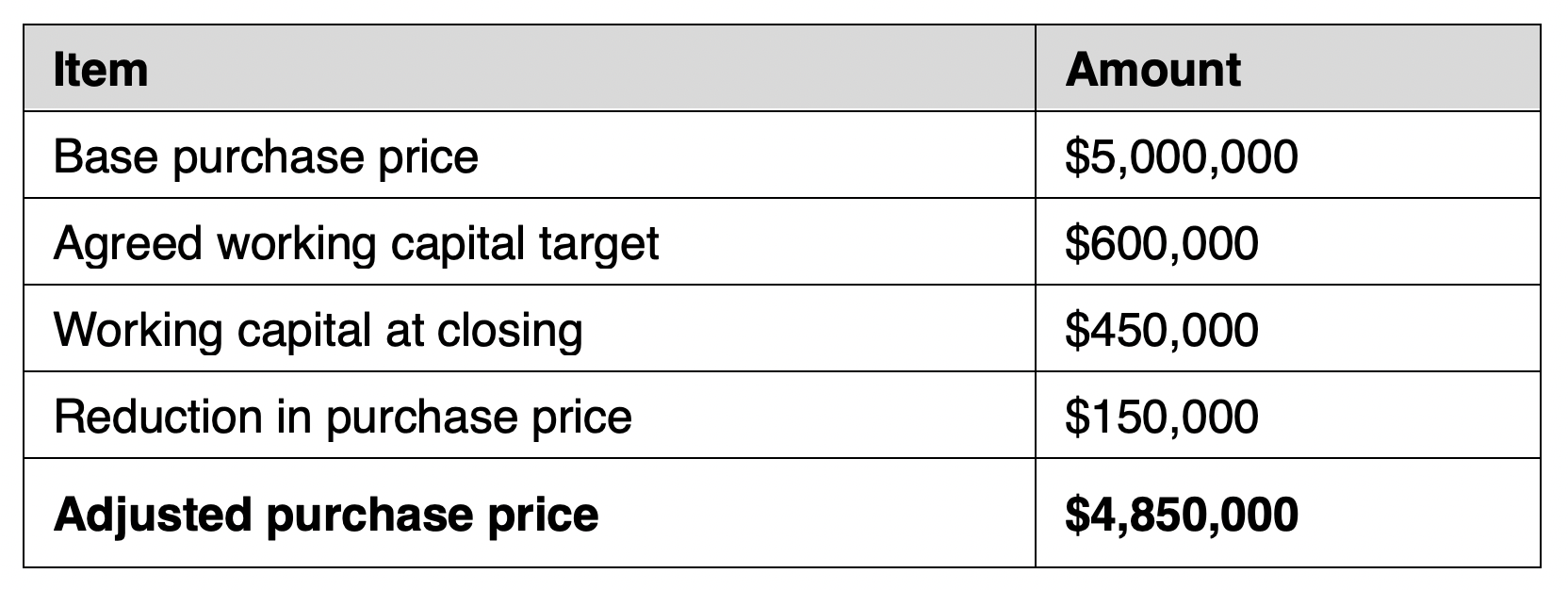
The $150,000 shortfall reduces the price by the same amount. If working capital were $650,000 instead, the same formula would increase the price by $50,000.
Under this formula, the target works like a second price term. If the business normally runs at $600,000 and the buyer asks for a $700,000 target, that extra $100,000 can come out of your price even if nothing changes in the business.
Not every deal adjusts dollar for dollar in both directions. Some ignore small differences, and others adjust only downward or cap the amount. Know which approach your agreement uses. These figures address only working capital. Debt payoffs, fees, taxes, and money held back under the agreement can also reduce the cash you actually receive.
The DME Details That Deserve Attention
In DME, billing and equipment practices make these numbers worth a closer look.
Money Owed to the Business
An insurance claim awaiting normal payment is different from a claim that is unlikely to be paid. If receivables are included, agree on how to value them. Consider the amount each insurer allows for the claim, the age of unpaid claims, denials, and missing paperwork. A delay alone does not make a claim worthless, and the amount billed does not always equal the amount that can be collected.
Supplies and Rental Equipment
Boxes of supplies held for sale serve a different purpose than equipment rented to patients. Rental equipment is often treated as a long-term asset that the base price already pays for, not as working capital, but agreements vary. The agreement should say which items count as inventory and how rental equipment is treated. It should also explain how damaged, expired, or outdated supplies affect the calculation.
Unpaid Operating Expenses
Supplier bills and payroll earned before closing may still be unpaid when the buyer takes over. The agreement should state which expenses reduce working capital and which are handled elsewhere in the deal.
Ask your accountant and attorney to work through these details together.
Agree on The Rules Early
Start the working capital discussion during the offer or letter-of-intent stage. You may not have a final target yet, but you should understand the proposed approach before making major commitments.
Historical results can help set the target. The period selected should make sense for the business. An unusual inventory purchase, a delayed insurer payment, or a recent increase in sales may make one month a poor guide to normal operations.
Use the same agreed definitions and accounting methods to set the target and calculate working capital at closing. For example, use the same method to value unpaid claims in both calculations. Otherwise, the parties may be comparing two different measures.
Ask for a sample calculation using your company’s numbers and include it with the purchase agreement. A worksheet showing each included account can reveal a disagreement that a paragraph of legal language might hide.
Also check how the adjustment fits with other payment terms. The same problem should not cost you twice. If an uncollectible claim already lowers working capital, the buyer should not recover that amount again through a separate claim against you.
Plan for The Final Review
The calculation used at closing is usually an estimate. The agreement may call for a later review to determine the final amount, followed by a payment from one party to the other. Some buyers hold back part of the price until that review is done.
That review should measure the business as of the closing date, using the agreed rules. The contract should explain what information received after closing may be used. For example, a payment received after closing may show that a claim was collectible on the closing date. A drop in value caused by something that happened after closing is a different matter.
Before signing, understand who prepares the final calculation, when it is due, and how long you have to object. You should have access to the records needed to check it. The agreement should explain how disputes will be resolved, often by an independent accountant.
Keep your accounting team involved after closing. A review deadline is easy to miss when you have moved on to other plans.
Three Questions to Ask before Signing
You do not need to be an accountant to get this right. Start with three questions:
- What counts? Ask for a clear list of the assets and bills included in working capital, along with items handled elsewhere.
- How was the target chosen? Understand the period used, any unusual items, and whether the same rules will apply at closing.
- What would the adjustment be using our numbers? Review a sample with your advisors and the buyer. Ask how different collection or inventory assumptions would change the result.
The goal is to agree on a fair calculation and understand its effect before you commit. A clear definition, a sensible target, and a worked example give you a better basis for judging the offer. When the closing statement arrives, you should be checking the math, with the key rules already settled.
Alfonso Zambrano, Esq. is a shareholder in the Corporate Group at Brown & Fortunato, P.C. Zambrano represents buyers and sellers in corporate transactions, with an emphasis on healthcare businesses, including DME suppliers. He can be reached at (806) 345-6354 or [email protected]