
SOAR Act Gets Year-End Push
WASHINGTON, D.C. – AAHomecare joined a broad coalition of patient, clinician, and industry organizations urging congressional leaders to include the SOAR (supplemental oxygen access reform) Act in year-end legislation.
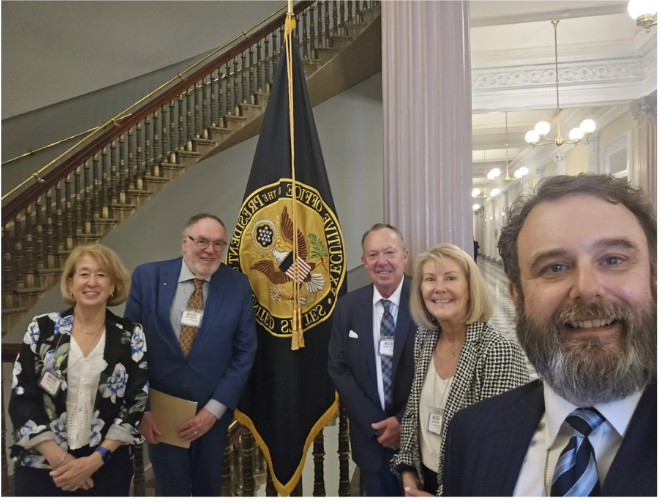 In a Nov. 10 letter, the groups urged Senate Majority Leader John Thune (R-SD), Senate Minority Leader Chuck Schumer (D-NY), House Speaker Mike Johnson (R-LA) and House Minority Leader Hakeem Jeffries (D-NY) to include the bipartisan Supplemental Oxygen Access Reform Act (H.R. 2902/S. 1406) in any end-of-year health care package.
Signers include the American Lung Association, American Thoracic Society, COPD Foundation, Pulmonary Fibrosis Foundation, American Association for Respiratory Care, VGM, and AAHomecare, among 31 organizations in all.
More than 1.5 million Americans rely on supplemental oxygen. The SOAR Act would address “well-documented access problems driven by the deep payment cuts resulting from the” competitive bidding program.

The letter explains that a single standard Medicare inpatient admission for a COPD exacerbation is estimated at roughly $10,600 to $12,100 in 2026, while continuous oxygen therapy cost about $1,790 per patient per year in 2025.
The 119th Congress adjourns at year’s end, and lead House sponsor Rep. David Valadao (R-CA) will not return in January. Bills that don’t pass must be reintroduced and start over in the 120th Congress.
Call your Representative this week and urge them to include the SOAR Act (H.R. 2902) in year-end legislation. The Capitol switchboard can be reached at (202) 224-3121.
AAHomecare to CMS: Target Real Fraud
WASHINGTON, D.C. – AAHomecare recently submitted comments to the Request for Information – Fraud Defense Contracts (RFI). In the RFI, CMS asked industry for ideas on how to redesign its Medicare program integrity contracting with “Fraud Defense Contracts.”
Under the new model, CMS would take a bigger role in lead development, prioritization, and law enforcement vetting, while contractors would focus on working CMS-assigned fraud investigations and supporting administrative and enforcement actions such as payment suspensions, revocations, and referrals.
In AAHomecare’s comments, the Association urged CMS to keep true fraud investigation separate from routine compliance, where unintentional documentation errors would go to the DME MACs for education.
The comments also call for: better site-inspector quality; real-time coordination with Medicare Advantage and Medicaid on revocations and reinstatements; contractor performance measured by fraud findings that hold up on appeal, rather than audit volume or dollars identified.
AAHomecare developed an overview document of all the recommendations the Association has made regarding fraud, waste, and abuse. Read it here.