

FORT WORTH, TX – About a decade ago, CPAP became widely known as the “gold standard” for obstructive sleep apnea (OSA) treatment. However, it also had a less-than-stellar reputation.
Masks were uncomfortable and about half of all patients ditched the therapy. While the perception has not completely gone away, regional providers have noticed a positive shift thanks to new technology and improved awareness.
 “We are seeing a higher compliance and adherence rate in our patient population than ever before,” says Josh Marx, CEO of Medical Service Company, a Cleveland-based regional DME with almost 40 locations. “Consumers and patients are more engaged in their health and wellness than ever before, with sleep as a cornerstone of total health. The emphasis on sleep has been a tailwind for MSC and the industry at large.”
Some of that success can be credited to MSC’s business model, but patients are also responding to multi-pronged messaging. Podcasts, social media, magazine articles, and even comedy routines have normalized CPAP and sleep awareness. Patients are showing a higher level of commitment toward regular usage and Marx is convinced that it “bodes well for our goals of treating patients faster, allowing them to sleep their best, and lowering total healthcare spending in the U.S.”

Maintaining Gold Status
 Despite many alternate OSA therapies popping up, manufacturers see plenty of opportunity for everyone. “More pathways to care is progress,” says George Koos, vice president, Product/Strategy & Marketing, React Health (a Medtrade exhibitor). “That said, PAP therapy remains the gold standard, and for good reason. No other treatment has demonstrated the same combination of efficacy, versatility, and depth of clinical evidence across such a broad patient population.”
The CPAP message is simple and accurate; If patients wear it, it will work. “CPAP should be matched to the right patient—paired with motivational tools, complementary treatment modalities, and longitudinal follow-up,” Koos says. “But when that equation is right, nothing outperforms it. The exciting part is that today’s PAP devices are more comfortable, connected, and personalized than ever before, removing the barriers that once stood between patients and successful therapy.”
The industry has made real progress, and engineers at React Health have been deliberate about where they focus their time and money. “Our foam-free device design eliminates one of the most common long-term compliance concerns—degradation and off-gassing,” Koos explains. “Our smaller motor architecture allows us to maintain remarkably quiet performance without relying on foam dampening.”
 Beyond hardware, React has invested in advanced pressure-response algorithms that deliver the right pressure at the right time, not simply more pressure. Combined with connected patient support and motivational tools, the goal is to meet patients where they are and keep them engaged in therapy.
While mask fit has traditionally been a challenge, recent advancements in manufacturing and fitting technology continue to provide significantly better options. Mark Boardman, founder of Sleep Coaches (a Medtrade exhibitor) provides compliance and supply management to HME clients looking to optimize patient care/engagement while maximizing revenue. “By implementing improved fitting processes, we have helped our HME clients reduce mask exchanges to less than 3%,” he says, “while achieving compliance rates of 85% or higher.”
Humans, AI, and Tube Up Masks
How should HME providers be combining the human element with the artificial intelligence side of the sleep business? Boardman contends that healthcare is fundamentally about human interaction and engagement.
“We do not see AI as a replacement for patient care,” Boardman states categorically. “Instead, we use it as a tool to empower our coaches to provide A+ service. By leveraging AI to identify patients’ specific needs based on their history and goals, our coaches can deliver the most effective engagement and value for each individual.”
 According to Marx at Medical Service Company, the largest operational challenges for onboarding new patients on CPAP has to do with coverage determination, payer rules, and connecting with patients to schedule them with clinicians. “We are using technology to compress the time from order received to when the patient starts sleeping their best,” Marx reveals. “Human elements remain paramount as we determine how and when to engage with patients, personally encourage them to take tomorrow’s appointment vs. two weeks from now—and offer empathetic and in-person support to stick with their therapy. We can’t do it without our team, but we can do it better with technology.”
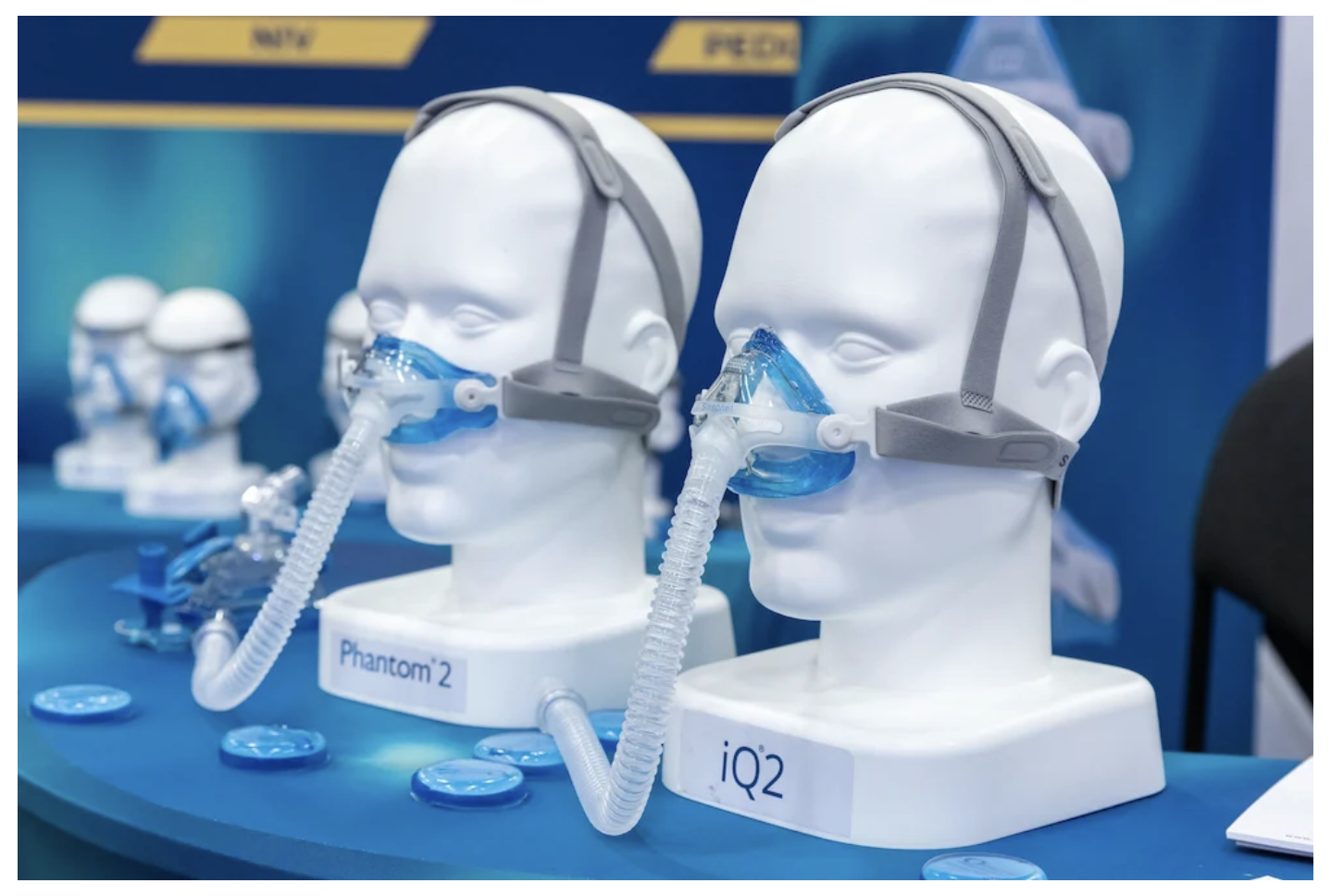
On the equipment side, Boardman points out that tube-up masks have become popular, enhancing sleep therapy by moving the tube to the top of the head instead of having it come from the front of the mask. “The front design pulls on the mask when patients move in their sleep,” Boardman explains. “CPAP masks with a top-of-head hose connection feature a swivel at the crown of the head. This keeps tubing out of your face, prevents tangling, and is ideal for active sleepers who change positions or sleep on their sides.”
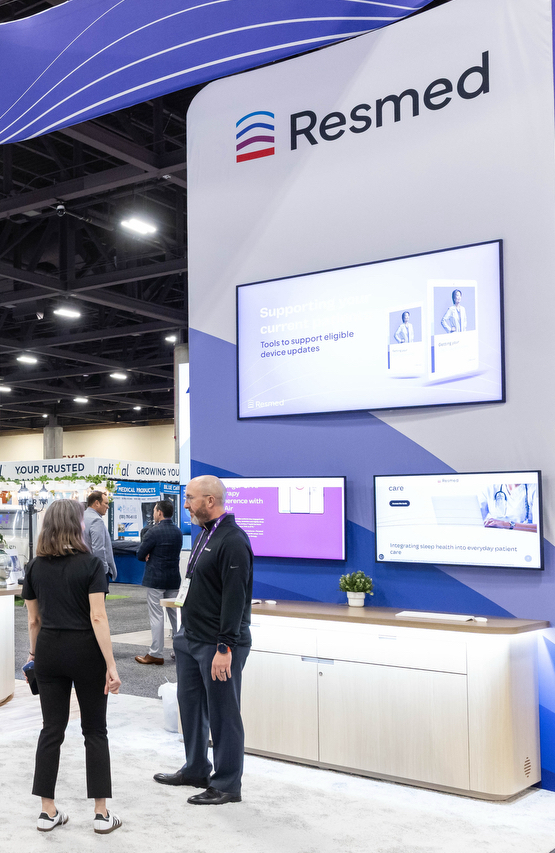 Top-of-head options include: Resmed AirFit P30i (a minimal-contact nasal pillow mask); Resmed AirFit N30i (features a nasal cradle cushion that rests under the nose); Resmed AirFit F30i (an under-the-nose full-face mask); and Philips DreamWisp (a nasal mask with a hollow frame that channels air to the cushion).
Koos at React Health believes that sleep medicine will continue to be a significant and durable growth opportunity in the HME space, but sustainable success requires more than simply stocking PAP equipment. “Providers who thrive are the ones who build a seamless patient experience, from initial diagnosis and therapy setup through ongoing support and long-term adherence,” he says. “That continuity is what drives outcomes and referral relationships alike. Equally important is choosing the right manufacturing partner.
“Reliable products, strong clinical support, innovative technology, and responsive service aren’t nice-to-haves, they’re the foundation of a sleep program that grows,” Koos continues. “As the healthcare landscape becomes more complex, providers need more than a vendor. They need a true partner that is genuinely invested in their success, committed to helping them grow their business, improve patient outcomes, and navigate an evolving market with confidence.”