

WASHINGTON, D.C. – The rate stability theme at AAHomecare endures as the fall season brings new opportunities for provider engagement. According to David Chandler, vice president of Payer Relations at AAHomecare, rate stability establishes guardrails, reimbursement floors, and adjustments that keep pace with inflation. “Coverage protection is also part of the equation,” he says, “to ensure patient access is not limited.”
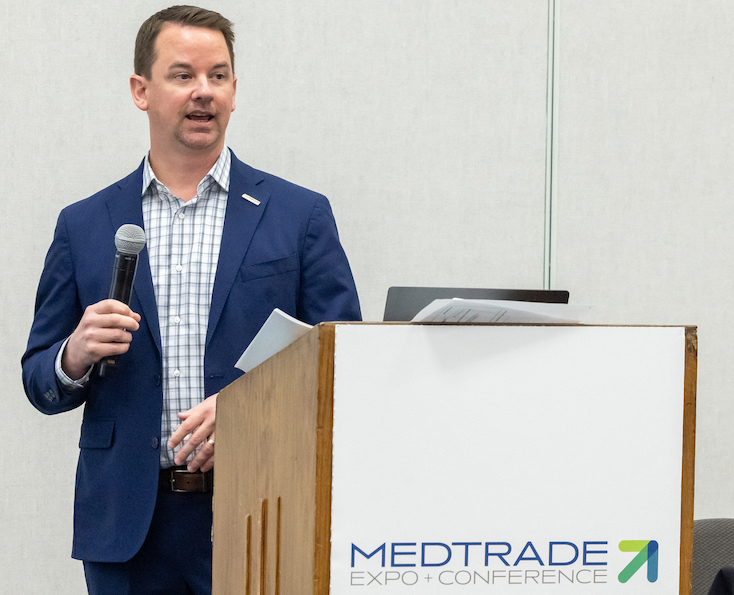 Medicaid funding is seeing real budgetary pressure from the “big beautiful” bill passed last year. In response, advocates are speaking out on many fronts about the HME value proposition.
“We meet regularly with state association partners to share successes and help identify solutions for these initiatives,” Chandler explains. “At the federal level, our priorities are competitive bidding, 75/25 blended rate relief, the SOAR [supplemental oxygen access reform] Act, and the Choices for Increased Mobility Act. Each one aims to keep the benefit sustainable.”
The broader message remains; When beneficiaries get their equipment and supplies at home, it can help them stay out of more expensive care settings—all while saving taxpayer dollars.

“Medtrade Monday readers can help by getting involved,” Chandler enthuses. “Many legislators will be in their districts this fall, which makes it a great time to connect. Reach out to your state and federal lawmakers. Attend an event or host one. Invite them to your location and show them the work firsthand. AAHomecare has materials on all of the issues and we’re happy to help with talking points. We need everyone engaged and building relationships with legislators.”
Competitive Bidding
Keeping legacy products out of the next round of competitive bidding was a huge win for AAHomecare and additional advocacy groups, and it came from years of advocacy. Those legacy products are: oxygen and respiratory equipment; CPAP devices; standard wheelchairs; and hospital beds.
Products included in the next round of competitive bidding are: class II continuous glucose monitors (CGMs) and insulin pumps; urological supplies; ostomy supplies; hydrophilic urinary catheters; and off-the-shelf back braces, knee braces, and upper-extremity braces.
For providers with sizable stakes in affected categories, concern runs high. As reported in the Sept. 14 issue of Medtrade Monday, providers such as Mark Drug Medical Supply in Wheeling, Illinois have roughly 50% of revenue wrapped up in ostomy and urological supplies.
Stephen Sear, a manager at Mark Drug, confirms that competitive bidding will have a dramatic effect on the business and its 17 employees. “These things also tend to have a trickle-down effect where lower rates trickle down to private insurers and Medicaid plans,” he laments. “So even if rates are not cut immediately, there’s going to be an effect on even the non-Medicare population.”
“We are definitely concerned about competitive bidding,” Chandler adds. “We have many concerns, but I’m most concerned about whether beneficiaries will keep getting the same quality products they’ve come to rely on. A second issue is the impact on hundreds of small businesses that serve these patients. Our federal team works on this issue basically every day—meeting with policymakers at every level including CMS, HHS, Congress, the SBA, and even the White House—all to push for changes to this program.”
Choices for Increased Mobility Act (S. 247)
The Senate is scheduled to adjourn on Oct. 2 and will not return until after the midterm elections, so AAHomecare is urging stakeholders to act now. The budget-neutral bill (S. 247) would make it easier for Medicare beneficiaries to upgrade to a titanium or carbon fiber ultra-lightweight manual wheelchair by creating two new codes for the base manual wheelchairs and titanium/carbon fiber wheelchairs. Sens. Marsha Blackburn (R-TN) and Tammy Duckworth (D-IL) introduced S. 247 on Jan. 24, 2025.
The House companion bill, H.R. 1703, passed the full House by voice vote this summer. With strong bipartisan support and broad endorsement from stakeholders, this bill is ready for Senate action. Providers are urged to call their senators before Oct. 2 and urge them to pass S. 247, the Choices for Increased Mobility Act.