

FORT WORTH, TX – If you’ve ever helped a friend move a refrigerator or a couch, you may have cursed the builders who made the doorway narrow and short. Fast forward to an ankle injury and suddenly those porch stairs are difficult to navigate even with crutches or a rollator.
 Despite an earnest advocacy and awareness push a few years ago, the concept of “universal design” has largely been relegated to the back burner. New homes are mostly not being built with age and potential disability in mind, but why not?
Cindi Petito, OTR/L, ATP, CAPS, director of Home Accessibility, VGM Live at Home, believes it comes down to tradition, economics, and assumptions. “Accessible design is still too often viewed as a specialized need rather than a mainstream design standard,” she laments. “Many builders are focused on short-term cost, speed, and what they assume buyers want today—instead of designing for long-term livability, changing family needs, and aging in place.”
Petito’s years in occupational therapy taught her that homes can either support independence or oppose it. Small modifications such as better lighting, grab bars, wider doorways, or a zero-step entry can improve safety and reduce caregiver strain—all of which can help people remain in their homes with dignity.

On the legislative front, there is still no broad federal home accessibility tax credit for the general public. Rep. Haley Stevens’ (D-Mich) introduced H.R. 7393 in 2024, but it did not become law. The concept was reintroduced in 2025 in the House and Senate, but neither bill gained traction.
“Federal support is still a patchwork,” Petito explains. “Some medically necessary home mods may qualify as an itemized medical expense deduction through the IRS, but only to the extent total medical expenses exceed 7.5% of adjusted gross income. There are also targeted federal programs, rather than a universal tax credit. For example, HUD’s Older Adult Home Modification Program funds accessibility modifications for low-income seniors through nonprofits and public entities, and VA’s HISA benefits help eligible veterans pay for medically necessary home modifications.”
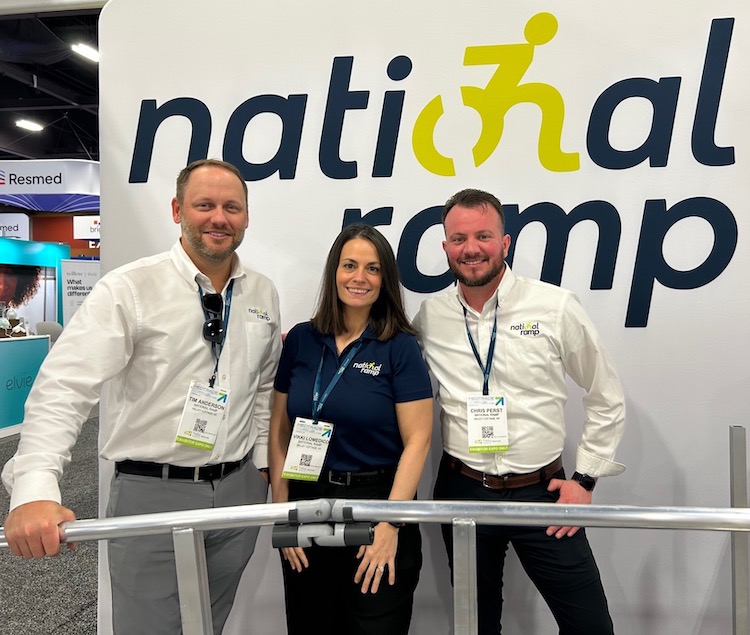 Manufacturers such as National Ramp are not surprisingly in favor of tax credits and incentives that can make accessibility improvements more affordable for families. “If Medicare provided funding for home modifications, the impact would benefit millions of people,” says Tim Anderson (pictured far left at Medtrade 2026 with team members), director of Business Development, National Ramp. “The healthcare industry spends billions addressing falls and preventable injuries retroactively. Proactive home modifications are often a fraction of those costs. If we can continue educating healthcare providers, insurers, case managers, and policymakers on the value of accessibility, the long-term benefits become very clear.”
“A relatively modest investment in a ramp, stair lift, or accessible bathroom can help prevent falls, reduce hospital readmissions, delay nursing home placement, and support family caregivers,” adds Marah Murphy, director of Marketing, Amramp (a Medtrade exhibitor). “The healthcare system often pays far more when people cannot safely remain at home. That said, legislation alone is not enough. The industry must focus on education, referral partnerships with healthcare providers, and public awareness. Many families are unaware of the options until they are facing an urgent situation. We need policy support and better outreach.”
Retail and Service
While Medicare funding would indeed expand opportunities, Wayne Grau, executive director at The National Coalition for Assistive & Rehab Technology, believes there are positive aspects to remaining outside of the Medicare box.
“This is mostly a cash business which diversifies revenue offerings and removes providers from insurance reliance,” he says. “Providers know these customers because they are already servicing them and have good relationships. Home modification provides an opportunity to expand personal relationships with customers by focusing on all their needs, not just the DME.”
For providers who wish to explore the ramp/home modification business, Anderson believes they should view accessibility as a service rather than a product. “Evaluate the segment as a profit center that you may not be realizing today,” he says. “The most successful providers focus on solving mobility challenges rather than simply selling equipment. Build relationships with discharge planners, therapists, case managers, veterans’ organizations, and community aging agencies. Invest in training, site assessment processes, and installation expertise.”
Most importantly, be responsive. “Accessibility needs are often urgent,” Anderson says. “Families remember the provider who answers the phone, visits quickly, and provides a clear solution.”
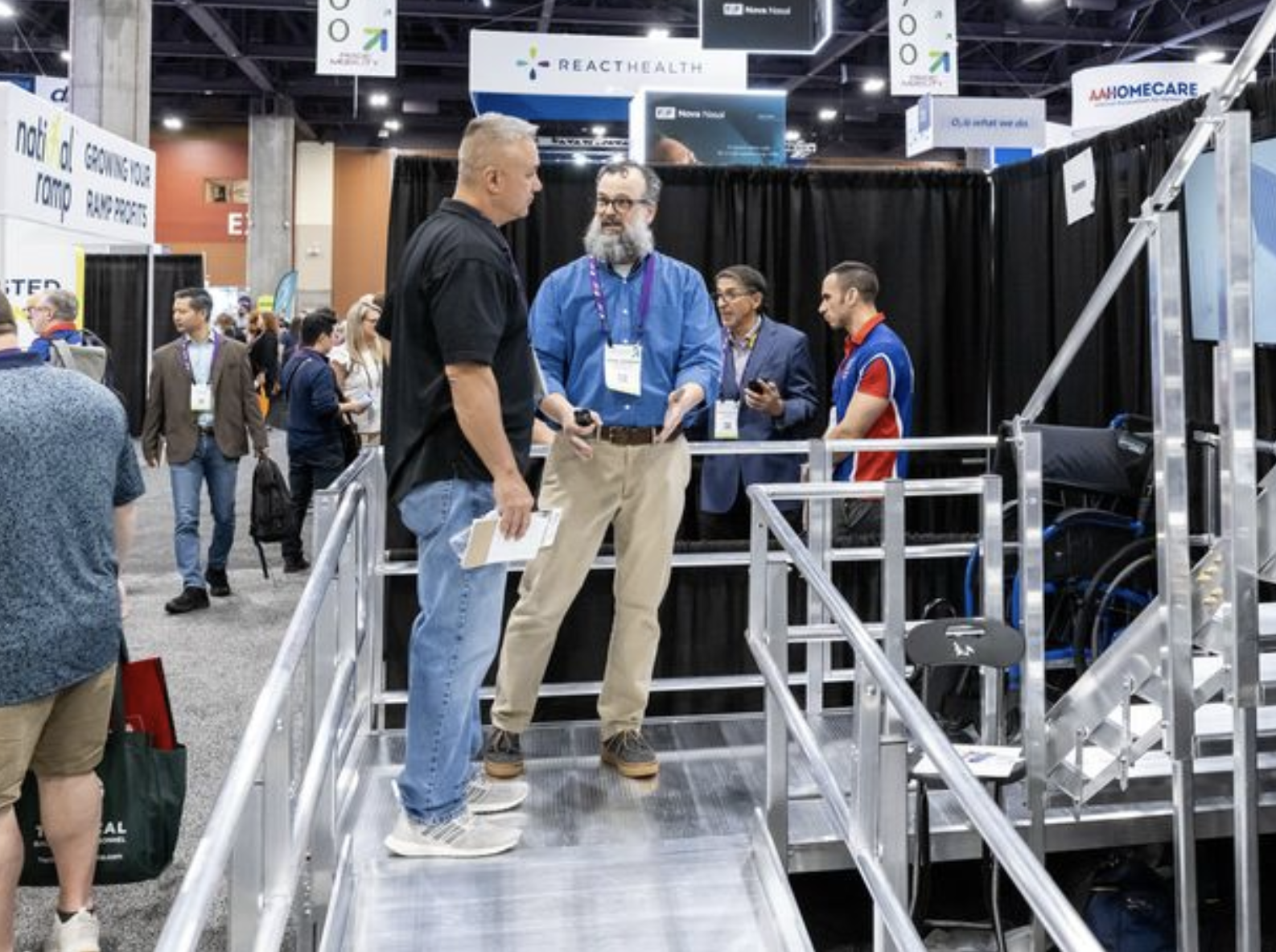 When families are in urgent need of ramps, Murphy believes they will discover quite a bit of variability because much depends on the user’s mobility needs—wheelchair, walker, scooter? “There are safety considerations, local regulations, and future needs to be considered during every ramp evaluation,” Murphy cautions. “A misconception is that we only serve the older population. We work with people of all ages, including children with disabilities, injured workers, veterans, people recovering from surgeries or accidents, and even people renovating their homes looking ahead to their future and wanting to make their home as accessible as possible now.”
Petito agrees that providers should approach the business as a service model and more than just a product line. “Start with education and training,” she says. “Build relationships with qualified contractors and clinicians, understand funding pathways, and focus on solving functional problems for the client—not just selling equipment. These efforts are being addressed through our VGM Live at Home new certification program launching later this year.”
When it comes to ramps in particular, the biggest misconception is that they are a low-margin commodity business. In reality, accessibility solutions can create long-term customer relationships and often lead to additional opportunities such as: stair lifts; vertical platform lifts; bathroom safety equipment; patient handling equipment; and other home modification projects.
“Providers who approach accessibility strategically often discover that it becomes one of the most relationship-driven and rewarding segments of their business,” Anderson enthuses. “Ultimately, accessibility should be viewed as a quality-of-life issue rather than a disability issue. Every person deserves the ability to safely enter, exit, and live in their home with dignity and independence. That’s a goal that National Ramp and our entire industry can rally around.”
Article is certified HUMAN.