

AMARILLO, TX – Last month, the office of Inspector General (OIG) published a report entitled “Medicare Advantage Organizations and CMS Can Do More to Prevent DME Fraud in Medicare Advantage.”
Why the OIG Prepared the Report
According to the OIG, fraud related to DMEPOS has been a longstanding issue in Medicare, putting millions of taxpayer dollars at risk each year. For example, in one recent case, the OIG points out that bad actors are accused of fraudulently billing Medicare for over $10 billion in DMEPOS. Up to this point, CMS’s efforts to prevent DMEPOS fraud have mainly focused on traditional Medicare fee-for-service (FFS), not Medicare Advantage.
 The OIG has concluded that Medicare Advantage is also at risk. With the recent growth in the number of enrollees, Medicare Advantage now accounts for more spending than traditional Medicare FFS. In addition, the OIG is witnessing fraud schemes— similar to those affecting traditional Medicare FFS—also impacting Medicare Advantage.
What the OIG Found
Medicare Advantage organizations (“MAOs”) and CMS take steps to screen fraudulent suppliers and prevent them from billing Medicare Advantage. However, the OIG notes that gaps exist in this screening that can be exploited by bad actors. Specifically, the OIG found:

- Gaps in MAO screening: – MAOs conduct some screening checks of in-network suppliers but fewer checks of out-of-network suppliers.
- Gaps in CMS screening: – CMS does not screen all DMEPOS suppliers before they bill Medicare Advantage because they are not all enrolled in Medicare. CMS uses a fraud prevention tool (known as the Preclusion List) to prevent certain DMEPOS suppliers from billing Medicare Advantage; however, the List has limitations in preventing fraud.
- Suppliers with the least screening—those that bill out of network and are not enrolled in Medicare—pose an increased fraud risk to the program.
OIG Recommendations
The OIG recommends that the following steps be taken:
- Ensure that MAOs strengthen checks of out-of-network DMEPOS suppliers.
- Strengthen the use of the Preclusion List to prevent fraudulent DMEPOS suppliers from billing Medicare Advantage.
- Require that all DMEPOS suppliers that bill Medicare Advantage be enrolled in Medicare, or seek statutory authority to do so if necessary.
CMS Response to OIG Report
CMS concurred with or stated that it would take into consideration all of the OIG’s recommendations.
Lessons for DME Suppliers
The Report discusses the next step in the evolution of fraud investigations of DME suppliers. Here is the evolution:
- President Johnson signed the Medicare Act in 1965. Medicare benefits are for the elderly and disabled.
- To serve the DME needs of the elderly, the DME industry came into being in the mid-1970s.
- With few exceptions, the DME industry flew under the government’s radar until the late 1990s.
- Beginning in the late 1990s, governmental agencies started focusing on the DME industry. We particularly saw this with the proliferation of audits.
- Beginning in the first decade of the 21st century, and continuing to date, the industry has had to deal with competitive bidding. A primary goal of competitive bidding is to reduce the number of DME suppliers billing traditional Medicare FFS.
- Over the last 15 years, we have seen the rapid growth of Medicare Advantage. Today, approximately 54% of Medicare beneficiaries are covered by Medicare Advantage Plans (“MAPs”).
- Traditionally, fraud enforcement and the conduct of audits have primarily fallen within the purview of traditional Medicare FFS. We are witnessing a shift in this. Increasingly, we are seeing MAPs conduct audits and conduct inquiries designed to uncover fraud.
- The Trump II Administration has taken a hard-line stance against the DME industry. We are seeing this with (i) the latest iteration of competitive bidding, (ii) the 36-Month Rule, and (iii) and the (now terminated) moratorium against the issuance of new PTANs.
- Additionally, CMS is now imposing additional responsibilities on accrediting organizations. In essence, CMS is requiring the accrediting organizations to be the front-line defense against DME fraud.
- And finally, we have this most recent OIG report. The government wants MAPs to become more proactive in preventing fraud in the DME space.
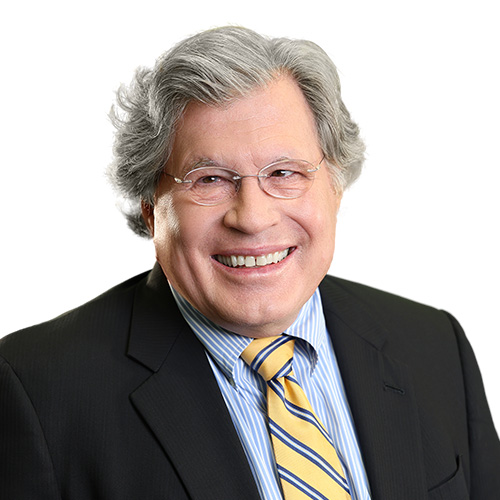
Jeffrey S. Baird, Esq., is chairman of the Health Care Group at Brown & Fortunato, a law firm with a national health care practice based in Texas. He represents pharmacies, infusion companies, HME companies, manufacturers, and other health care providers throughout the United States. Baird is Board Certified in Health Law by the Texas Board of Legal Specialization and can be reached at (806) 345-6320 or [email protected].
AAHOMECARE’S EDUCATIONAL WEBINAR
Loan Closets, Employee Liaisons, and Other Arrangements with Referral Sources
Presented by: Jeffrey S. Baird, Esq., Brown & Fortunato & Noel Neil, ACU-Serve
Tuesday, November 10, 2026
1:30-2:30 p.m. CENTRAL TIME
In the non-health care world, businesses (e.g., auto parts stores) have very few restrictions regarding their relationships with referral sources. By contrast, the health care world is a totally different animal. Because a large portion of a DME supplier’s revenue is derived directly (or indirectly) from tax dollars, there are myriad federal and state laws designed to protect the tax dollars from fraud. Many of these laws focus on relationships health care providers have with physicians, hospitals, and other referral sources. This program will discuss such relationships between DME suppliers and referral sources. These arrangements include (i) loan closets (also known as consignment closets and stock and bill arrangements), (ii) employee liaisons, (iii) Medical Director Agreements, (iv) physician advisory boards, (v) preferred provider agreements, (vi) patient service agreements, (vii) marketing service arrangements, and (viii) subcontract agreements. The program will discuss how these relationships can be legally entered into…and pitfalls that need to be avoided.
Register for Loan Closets, Employee Liaisons, and Other Arrangements with Referral Sources on Tuesday, November 10, 2026, 1:30-2:30 p.m. CT, with Jeffrey S. Baird, Esq. and Noel Neil.