

PHOENIX – Many Medtrade attendees will be looking for artificial intelligence (AI) solutions when the show convenes March 2-4 at the Phoenix Convention Center. The team at Notable Systems (Booth #1545) has dedicated itself to helping DME providers navigate the new technology in an effective manner, specifically using a combination of AI, machine learning, and human-in-the-loop processing.
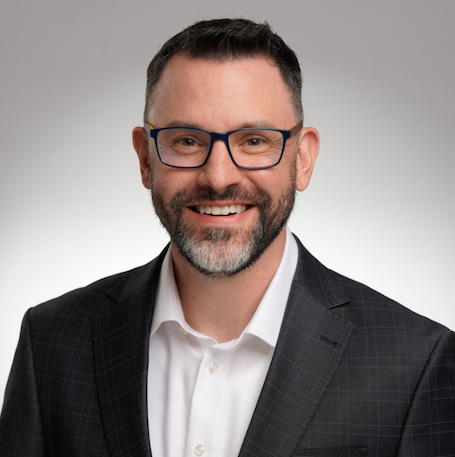
“Notable Systems partners with companies to deliver superior AI-driven revenue cycle management solutions that are purpose-built for automatic processing,” says Brian Nannie, president of Notable Systems, Salt Lake City, Utah. “We turn cluttered documentation into clean, usable data. That means faster claims, fewer denials, and more time for teams to do meaningful work.”
Officials at Notable Systems spread the word about AI-driven solutions at last year’s Medtrade in Dallas, and the company is eager to share the latest innovations with attendees in Arizona. Medtrade Monday sat down with Nannie to learn more about the ever-changing AI world and how it can improve revenue cycle management (RCM).
 Medtrade Monday: What are the realities of AI in the DME world right now?
Brian Nannie: The market is incredibly noisy right now. It feels like every time you look at your phone, there’s a new AI startup promising the world. But in our industry, you have to look past the hype. There’s often a gap between a flashy promise and actual substance that can handle the complexities of healthcare.

Medtrade Monday: How is Notable Systems different?
Nannie: Our differentiator is really our DNA. We aren’t just tech people guessing at how healthcare works; we have deep DME experience embedded across our entire organization. That knowledge permeates everything we do. Because we merge that industry grit with an exceptional engineering team, we don’t just build software—we build solutions that automates the RCM cycle in a way that actually makes sense for providers.
Medtrade Monday: What types of solutions can Medtrade attendees learn about?
Nannie: We tackle the friction points across the whole lifecycle with four core solutions. We have an Intake Manager to handle that heavy front-end work, a Claims Manager to ensure clean qualifications, and an Appeals Manager for when things get kicked back. Finally, our Correspondence Manager automates the back-end processing—things like letters, ERNs, and EOBs. It’s about covering the workflow from start to finish.
 Medtrade Monday: What would you say to providers who are on the fence about seeking help from an outside company?
Nannie: Look, bringing in outside help isn’t a light decision. It touches everything—your revenue cycle, your referral sources, and ultimately your patient satisfaction. But given how much the market has shifted, providers really need to focus on structure and efficiency to grow. My advice is to scrutinize who you partner with, absolutely, but don’t let hesitation stop you from making a necessary change. The cost of standing still is often higher than the risk of moving forward.
Medtrade Monday: Why is it so important to use technology and improve business efficiency?
Nannie: With competitive bidding looming and reimbursement likely tightening, efficiency is no longer just a ‘nice to have’—it’s existential. Providers have to take that leap. It can be overwhelming, which is why doing your homework is crucial. You need to find a partner who understands your specific pain points. You aren’t just looking for software; you’re looking for a solution that solves a business problem.
Medtrade Monday: How concerned are you about competitive bidding’s return?
Nannie: If history is any indicator, competitive bidding will compress reimbursement rates. When your top-line revenue gets squeezed, your only survival lever is operational efficiency. But the old adage of ‘doing more with less’ isn’t enough anymore. You need technology that fundamentally changes how you work, enabling your team to handle more volume without burning out.
Medtrade Monday: What is the proper way to view AI?
Nannie: You can’t just view AI as plug-and-play software; that’s where the risk of failure lies. You have to view it as a total process transformation. Even providers who are doing everything right might not have AI as a core competency, and that’s okay. That is why we launched our AI Transformation Partnership Program. We help clients identify exactly where AI drives ROI for them, ensuring they aren’t just buying tech, but getting real value.
Medtrade Monday: What do you say to those who are scared of AI?
Nannie: Don’t be afraid to evolve. Change is scary, but if you work with a partner who has lived in this industry, understands the nuances, and is willing to sit down and map this out with you, the results are incredible. It’s not just about installing technology; it’s about transforming your business to be ready for the future.
Notable Systems has signed on to exhibit at Medtrade, scheduled for March 2-4 at the Phoenix Convention Center. Medtrade attendees can chat with Notable Systems team members at Booth #1545.