

On Tuesday, June 23, 2026, the Department of Justice (“DOJ”) issued a press release that says, in part:
The Justice Department today announced the 2026 National Health Care Fraud Takedown, which resulted in charges against 455 defendants, including 90 doctors and other licensed medical professionals, for their alleged participation in health care fraud and opioid abuse schemes involving over $6.5 billion in false claims and significant patient harm, including death … The Takedown involves the cutting-edge use of data analytics to target the worst actors; the seizure of over $182 million in cash, luxury vehicles, jewelry, and other assets; and full-spectrum accountability for all criminal actors from doctor’s offices to corporate boardrooms.
Today’s coordinated enforcement action involves a whole-of-government approach, including:
- Actions by the Centers for Medicare and Medicaid Services (CMS) to suspend 1,079 providers and revoke billing privileges for 1,403 providers.
- 48 Civil Monetary Payment settlements amounting to over $73 million, over 1,400 provider exclusions, and 25 actions by the U.S. Department of Health and Human Services, Office of Inspector General (“HHS-OIG”) under the Civil Monetary Penalties Law seeking more than $10 billion in payments to the Medicare Trust Fund from payments that CMS caught and suspended before the funds were paid to the fraudulent providers.
- Civil charges against 13 defendants for $14.8 million in health care fraud schemes, as well as civil settlements with 31 defendants totaling $23 million.
- 928 administrative cases by the Drug Enforcement Administration (DEA) seeking the revocation of authority to handle and/or prescribe controlled substances since October 1, 2025.
“This year’s National Health Care Fraud Takedown represents the greatest whole-of-government effort to combat health care fraud in our Nation’s history,” said Acting Attorney General Todd Blanche. “Under the decisive leadership of President Donald Trump, Vice President JD Vance, the White House Task Force to Eliminate Fraud, and our law enforcement partners, this administration has ushered in a new era of enforcement that will safeguard taxpayer dollars.”
…
Fraudulent Wound Care Schemes
Charges were filed against 11 defendants, including a company executive and eight medical professionals, across six districts in connection with billions of dollars in fraudulent claims for amniotic wound allografts. In the District of Arizona, the Vice President of Sales for a company that sold allografts was charged in a nationwide illegal kickback and health care fraud scheme. From approximately December 2021 through June 2024, providers billed Medicare over $4 billion for this company’s allografts, resulting in over $2 billion in payments. This significant spike in allograft billings was alleged to have been driven not by medical necessity, but by a kickback scheme that generated substantial profit margins and lavish lifestyles for marketers and providers who participated. The company did not manufacture allografts and instead acquired allografts from tissue banks and relabeled them for sale at a 2,000% mark-up, charging up to $1,450 per square centimeter. The defendant is alleged to have paid illegal kickbacks of approximately 40% of that amount, allowing marketers and medical providers to pocket approximately $500-600 per square centimeter. These lucrative kickbacks allegedly caused the defendant and others to target hospice patients and apply the allografts without coordination with the patients’ treating physicians, without proper treatment for infection, to superficial wounds that did not need this treatment, and to areas that far exceeded the size of the wound …
…
In the Southern District of Texas, a nurse practitioner was charged for a $906 million scheme in which she applied medically unnecessary allografts and billed Medicare more than $1 million per patient on average
Similarly, in the Middle District of Florida, three defendants were charged for their roles in an $118 million allograft fraud scheme where a nurse practitioner allegedly used the proceeds to fund her lavish lifestyle …
The Health Care Fraud Unit’s Data Analytics Team detected a spike in payment for allografts, leading to prosecutions. CMS separately realigned payment, reducing Medicare’s payment to $127 per square centimeter starting on January 1, 2026 …
“Prosecuting criminals who steal from American patients is necessary—but stopping them before a single dollar leaves the building is smarter,” said CMS Administrator Dr. Mehmet Oz. “CMS is done playing catch-up. We’re deploying advanced data analytics to expose fraud networks, freeze suspicious payments, and shut down bad actors before they can do damage to the programs that millions of Americans depend on.”
Data Fusion Center, Financial Intelligence Review Team, and Data Analytics Enhancements
The Health Care Fraud Unit is a leader in employing advanced data analytics. Its Data Fusion Center —announced as part of last year’s Takedown and comprised of experts from the Unit’s Data Analytics Team, HHS-OIG, FBI, and other agencies—used advanced analytics in many of the cases charged today. The Department is announcing the first prosecution arising from the Fusion Center’s Financial Intelligence Review Team, which was formed last year to combine traditional data analytics with financial analysis, in connection with a $67 million scheme to bill Illinois Medicaid for behavioral health services that were not provided. The defendant allegedly submitted claims to Medicaid for 500 or more hours of counseling and therapy services per day, well in excess of what the providers on staff could render even if all providers were working 24 hours per day … Data analysis established that patients were hospitalized at other institutions on days that the defendant billed for behavioral health services, and the Health Care Fraud Unit’s specialized prosecutors opened the investigation within five days of the financial intelligence review …
…
In the Central District of California, charges were brought against a hospice owner and two marketers for a $27.7 million Medicare fraud scheme in which the hospice owner allegedly tried to avoid detection through a scheme to purchase information of the recently deceased from a funeral home employee. The defendant was allegedly carrying out a hospice fraud scheme in which he fraudulently enrolled patients who were not terminally ill …
In today’s Takedown, the Department announced the seizure of over $27 million in fraudulent Medicare payments in the Southern District of Florida as part of a data-driven effort to target “bust-out schemes” involving 12 clinics that billed Medicare millions of dollars for allografts that were never provided to patients. This novel and proactive “follow and seize the money” approach maximized recovery of stolen taxpayer dollars.
To enhance the deployment of advanced analytics to target health care fraud, the Fraud Division and CMS announced today that they have entered an agreement whereby the Fraud Division will be provided cloud computing space in the CMS Integrated Data Repository environment in which to deploy advanced data analytics algorithms and artificial intelligence tools …
Patient Harm
Health care fraud is a top white-collar priority of the Department because it both steals from the taxpayers and risks harm to patients by corrupt medical providers. In the Southern District of Florida, the medical director of a cardiovascular testing and treatment practice was charged in connection with an $89 million scheme to bill for unnecessary cardiovascular tests, such as EKGs and echocardiograms, conducted on student athletes on school campuses. According to the charges, the defendant and his co-conspirators used marketing tactics designed to prey on fears that student athletes could die from sudden cardiac arrest. The defendant then allegedly falsified diagnoses to defraud health care benefit programs for the testing. Despite knowing, as the defendant wrote, that “these kids could be high risk . . . one of them drops dead on the field, they’re coming after both of us,” he allegedly rubber stamped the test results as normal without reviewing them—sometimes approving test results within mere seconds—such that student athletes with cardiac abnormalities were not informed that they needed to stop participating in sports, risking sudden cardiac arrest. Despite one patient’s test results showing an enlarged heart, the defendant allegedly signed off on the test results as normal within approximately 11 seconds of accessing the 63 cardiovascular test result images. Approximately 24 days later, the student athlete died from complications related to an enlarged heart during a basketball practice.
…
Medicaid Fraud
Data shows that Medicaid is a vital government benefit program increasingly targeted by criminals. Building upon the success of the recent Minnesota Health Care Fraud Takedown and the Acting Attorney General’s authorization of an enhancement for the Health Care Fraud Unit to investigate Medicaid fraud nationwide, today’s Takedown includes the largest number of Medicaid fraud defendants and Medicaid fraud loss charged in Department history: 295 defendants and over $518 million in false claims submitted to Medicaid.
…
Transnational Organizations, International Cooperation, and the Most Wanted Fraudsters List
Last month’s Takedown demonstrates that no fraudster can hide from the law, whether in the United States or abroad, and involved unprecedented international cooperation. In the 2025 National Health Care Fraud Takedown, 29 defendants were charged for their roles in a transnational criminal organization alleged to have submitted over $10 billion in fraudulent claims. Since then, the organization continued the scheme, and, in the Southern District of Florida, Ibrahim Hilmi was charged in connection with an additional $3.7 billion in false claims for urinary catheters and other durable medical equipment that was never provided …
On June 4, the FBI announced the creation of the Most Wanted Fraudsters List. The list included Herb Kimble, a fugitive in a $1.2 billion telemedicine and durable medical equipment scheme, who, on June 8—just four days later—was apprehended in the Philippines
Illegal Opioid Distribution
36 defendants, including 28 licensed medical professionals, were charged in connection with the alleged illegal diversion of prescription opioids and other controlled substances that resulted in patient harm. In the Eastern District of Pennsylvania, three defendants were charged with conspiracy to unlawfully distribute controlled substances. The defendants allegedly operated a voicemail refill line that allowed patients to request and receive refills of Schedule II controlled substance prescriptions—though some patients who used the refill line to obtain Schedule II controlled substances from the defendants suffered drug overdoses and died …
…
Today’s Takedown was led and coordinated by the Department’s Health Care Fraud Unit and its core partners from U.S. Attorneys’ Offices, HHS-OIG, FBI, DEA, and Medicaid Fraud Control Units (MFCUs) across the country. The cases are being prosecuted by Health Care Fraud Strike Force teams, 56 U.S. Attorneys’ Offices, and 45 State Attorneys General’s Offices nationwide.
…
In addition to FBI, HHS-OIG, DEA, and MFCUs, CMS, Homeland Security Investigations, the Department of Veterans Affairs, Office of Inspector General, IRS Criminal Investigation, Defense Criminal Investigative Service, Department of Labor, United States Postal Service Office of Inspector General, Office of Personnel Management Office of Inspector General, and other federal, state, and local law enforcement agencies participated in the operation.
…
“Today’s coordinated takedown reflects the Department of War Office of Inspector General’s unwavering commitment to protecting Service members, retirees, and their families from those who exploit federal health care programs,” said Inspector General Platte B. Moring III. “Working alongside our law enforcement partners, the Defense Criminal Investigative Service continues to pursue schemes that endanger patients, erode trust in the medical system, and divert resources critical to military readiness.”
On April 7, the Department of Justice announced the creation of the National Fraud Enforcement Division. The Fraud Division is laser-focused on investigating and prosecuting those who commit fraud against the American people. The Department’s work to combat fraud supports President Trump’s Task Force to Eliminate Fraud, a whole-of-government effort chaired by Vice President J.D. Vance to eliminate fraud, waste, and abuse within Federal benefit programs.
Prior to the charges announced as part of today’s nationwide Takedown and since its inception in March 2007, the National Fraud Division’s Health Care Strike Force program, currently comprised of nine strike forces operating in federal districts across the country, has charged more than 6,200 defendants who collectively billed federal health care programs and private insurers more than $45 billion…
Lessons for DME Suppliers
The latest health care fraud “take down” contains the following lessons for DME suppliers:
Large Volume of Claims Submissions for a Particular Product
If a DME supplier is submitting a large volume of claims for a particular product, such claims will come under scrutiny. By utilizing AI and other advanced technologies, the government can detect a billing pattern that indicates fraud. To a lesser extent, Medicare Advantage Plans (“MAPs”) and Medicaid Managed Care Plans (“MMCPs”) are adopting the same approach.
If a DME supplier is submitting a large volume of claims for a particular product, the supplier needs to be confident that (i) its “house is in order” and (ii) it can withstand scrutiny.
Large Profit Margin for a Particular Product
If the reimbursement for a product is high as compared to the cost to the DME supplier to purchase the product…and if the supplier is submitting a large number of claims for the product…such claims submissions will likely be scrutinized. Past examples of this are diabetic testing strips and back braces. Current examples include CGMs and “soft goods” such as catheters and ostomy. In the non-DME space, as reflected in the press release, a glaring example is the sale of amniotic skin patches. In the pharmacy space, we observed this when TRICARE was billed an obscene amount of money for tubes of compounded pain cream.
I call this the “flavor of the month.” When a DME supplier recognizes that a particular product has a large profit margin, and decides to promote the sale of the product, scrutiny will follow.
The Government is no Longer Dependent on Whistleblowers
Historically, the vast majority of civil and criminal DOJ investigations of DME suppliers were instigated by whistleblowers…often an employee of a DME supplier who gathers internal evidence of wrongdoing. While whistleblower lawsuits will continue to be an important part of the DOJ’s fraud arsenal, as reflected in the press release, the government is developing real time avenues of fraud detection through the use of AI and other enhanced technologies.
 Conclusion
There is a term I like to use called “healthy paranoia.” By this I mean that today’s DME supplier needs to be obsessed with being legally compliant. It the supplier is not legally compliant, it will likely be “outed.” It is much better to make less money and sleep well at night…than make a lot of money and lay awake at night with worries.
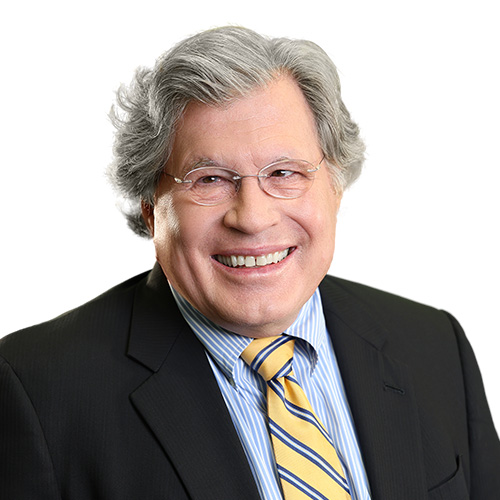
Jeffrey S. Baird, Esq., is chairman of the Health Care Group at Brown & Fortunato, PC, a law firm based in Texas with a national healthcare practice. He represents pharmacies, infusion companies, HME companies, manufacturers, and other healthcare providers throughout the United States. Mr. Baird is Board Certified in Health Law by the Texas Board of Legal Specialization and can be reached at (806) 345-6320 or [email protected].
