

AMARILLO, TX – All health care providers are closely regulated by federal agencies. A primary reason for such oversight is the fact that much of health care is directly or indirectly paid by taxpayer money. The purpose behind federal health care fraud statutes, regulations, advisory opinions, fraud alerts and advisory bulletins (collectively referred to as “federal laws”) is to protect taxpayer money from being misused.
 DME suppliers are particularly dependent on Medicare revenue…whether such revenue comes from the traditional Medicare program or from Medicare Advantage Plans (“MAPs”). The reason for this dependence is because DME suppliers primarily serve the elderly…and the elderly are primarily covered by traditional Medicare and MAPS.
It is important for DME suppliers to be aware of the federal laws that govern their activities. If a DME supplier is violating a federal law, such violation will likely eventually come to the attention of the federal government. The government can become aware of federal law violations through one or more of the following mechanisms:
- A DME MAC will notice that the number of claims submitted by a DME supplier, for a particular product, has spiked.
- A DME MAC will notice that a DME supplier is submitting a large volume of claims for a product that the government believes is being fraudulently provided by DME suppliers.
- In an audit, the UPIC will (i) drill down on a DME supplier’s activities and (ii) conclude that such activities are fraudulent.
- A competitor files a complaint with the Department of Justice and/or the OIG.
- A whistleblower (often an employee of the DME supplier) files a qui tam lawsuit against the DME supplier.
- It appears to be the intent of CMS that accrediting organizations be the front line defense against fraud. This is unique because the purpose of accrediting organizations has historically been to ensure that DME suppliers adhere to the quality standards.
Consequences of violating a federal law can be one or more of the following: (i) revocation of a PTAN, (ii) repayment of claims, (iii) fines and penalties, and (iv) a criminal conviction.
Set out below is a summary of the federal laws that DME suppliers need to be aware of.
Physician Self-Referral Statute (“Stark”) – This is a civil statute. Stark states that if a physician (or an immediate family member) has a financial relationship (ownership or compensation) with an entity providing designated health services (“DHS”), then the physician may not refer Medicare/Medicaid patients to the entity unless a Stark exception applies. DHS includes DME.
- The Stark definition of “physician” includes dentists, chiropractors and similar clinicians. If a DME supplier intends to enter into an arrangement with e.g., a home health agency (not owned by a physician), Stark does not come into play. The DME supplier needs to focus on the AKS. On the other hand, if the DME supplier intends to enter into an arrangement with a physician, the supplier must comply with both the federal anti-kickback statute (“AKS”) and Stark.
- An important exception is the non-monetary compensation exception (“NMCE”). This allows the DME supplier to spend a certain amount each year on a physician for meals, rounds of golf, etc. In 2026, that amount is $535. There is an annual inflation adjustment. If a physician is part of a five physician group, the supplier can spend up to $535 in 2026 for each of the five physicians. Interestingly, there is not a comparable exception or safe harbor to the AKS. And so one might assert that while it is acceptable under Stark for the DME supplier to spend up to $535 in 2026 on a physician, such expenditures violate the AKS. From a practical standpoint, if the NMCE is met, there should not be a problem under the AKS. The NMCE only applies when what is spent on behalf of a physician is for gifts, meals, entertainment, etc. The DME supplier cannot offer cash/cash equivalents to a physician.
- Assume that a DME supplier is located in Dallas and a physician has an ownership in it. The physician cannot refer Medicare/Medicaid patients to the DME supplier. On the other hand, if the DME supplier is located in a small rural Texas farming community, then a physician can have an equity interest in the DME supplier and can refer Medicare/Medicaid patients to the supplier. The reason for this is that Stark has a “rural provider” exception that relaxes the Stark restrictions when the physician and the DME supplier are located in a rural area and primarily service rural patients.
Beneficiary Inducement Statute – The beneficiary inducement statute imposes civil monetary penalties on a person or entity that offers or gives remuneration to any FHCP patient that the offeror knows or should know is likely to influence the recipient to order an item for which payment may be made under an FHCP. However, this statute does not prohibit the giving of incentives that are of “nominal value” (no more than $15 per item or $75 in the aggregate to any one beneficiary on an annual basis). The nominal gift needs to be something that can be “touched and felt.” It cannot be cash or a cash equivalent such as a gift card. Additionally, the value of the gift is its “retail” value to the public…not what it cost the DME supplier to purchase the gift.
Federal Anti-Kickback Statute – This is a criminal statute. The AKS makes it a felony to knowingly and willfully offer, pay, solicit, or receive any remuneration to induce a person or entity to refer an individual for the furnishing or arranging for the furnishing of any item or service reimbursable by a federal health care program (e.g., Medicare, Medicare Advantage, Medicaid, Medicaid Managed Care, TRICARE), or to induce such person to purchase or lease or recommend the purchase or lease of any item or service reimbursable by a federal health care program (“FHCP”).
- A referral source can be any person (e.g., physician, hospital discharge planner, custodian) or entity (e.g., lead generation company, home health agency).
- A number of courts have adopted the “one purpose” test: if “one purpose” behind paying a person/entity is to reward the person/entity for referrals, then the AKS is violated notwithstanding that the primary purpose behind the payment is for substantive (e.g., operational) services.
Safe Harbors – Because of the breadth and scope of the AKS, the Office of Inspector General (“OIG”) has published a number of “safe harbors.” These can be found on the OIG’s website. If an arrangement meets the requirements of a safe harbor, then as a matter of law the arrangement does not violate the AKS. If an arrangement does not meet the requirements of a safe harbor, it does not mean that the arrangement automatically violates the AKS. Rather, the arrangement must be carefully scrutinized under the wording of the AKS, court decisions, and published guidance by the OIG. Set out are four of the most important safe harbors for DME suppliers:
- Employees – Remuneration does not include any amount paid by an employer to an employee, who has a bona fide employment relationship with the employer, for employment in the furnishing of any item or service for which payment may be made, in whole or in part, under an FHCP.
- Personal Services and Management Contracts – Remuneration does not include any payment made to an independent contractor as long as a number of requirements are met, including the following:
- the agreement must be in writing and signed by the parties;
- the agreement must specify the services to be provided;
- the term of the agreement must be for not less than one year;
- the methodology for calculating the compensation must be set in advance, be consistent with fair market value (“FMV”), and must not take into account any business generated between the parties; and
- the services performed must not involve a business arrangement that violates any state or federal law.
- Space Rental – Remuneration does not include a lessee’s payment to a lessor as long as a number of requirements are met, including the following:
- the lease agreement must be in writing and signed by the parties;
- the lease must specify the premises covered by the lease;
- if the lease gives the lessee periodic access to the premises, then it must specify exactly the schedule, the intervals, the precise length, and the exact rent for each interval;
- the term must be for not less than one year; and
- the aggregate rental charge must be set in advance, be consistent with FMV, and must not take into account business generated between the lessor and the lessee.
- Small Investment Interest – For investments in small entities, “remuneration” does not include a return on the investment if a number of standards are met, including the following: (i) no more than 40% of the investment can be owned by persons who can generate business for or transact business with the entity, and (ii) no more than 40% of the gross revenue may come from business generated by investors.
Telephone Solicitation Statute – This is a civil statute. It states that a DME supplier may not contact a Medicare beneficiary by telephone regarding the furnishing of a Medicare-covered item unless:
- the beneficiary has given written permission for the contact;
- the supplier has previously provided the covered item to the beneficiary and the supplier is contacting the beneficiary regarding the covered item; or
- if the telephone contact is regarding the furnishing of a covered item other than an item already furnished to the beneficiary, the supplier has furnished at least one covered item to the beneficiary during the preceding 15 months.
The telephone solicitation statute essentially says the same thing as Supplier Standard #11.
Special Fraud Alerts and Special Advisory Bulletins – The OIG publishes Special Fraud Alerts and Special Advisory Bulletins that discuss business arrangements that the OIG believes may be fraudulent. These can be found on the OIG’s website.
Advisory Opinions – A DME supplier may submit to the OIG a request for an advisory opinion concerning a business arrangement that the supplier has entered into or wishes to enter into in the future. In submitting the advisory opinion request, the DME supplier is asking the OIG whether the arrangement may implicate the AKS. In response, the OIG will issue an advisory opinion concerning whether or not there is a likelihood that the arrangement will implicate the AKS. In issuing the opinion, the OIG will redact the names of the parties (e.g., will call them Party A and Party B). The OIG website contains all of the published advisory opinions.
States – All states have enacted laws prohibiting kickbacks, fee splitting, patient brokering, and/or self-referrals. Some state anti-kickback statutes only apply when the payor is a government health care program (e.g., the state Medicaid program). Other state anti-kickback statutes apply regardless of the identity of the payor (e.g., they apply to commercial insurers and cash-pay patients).
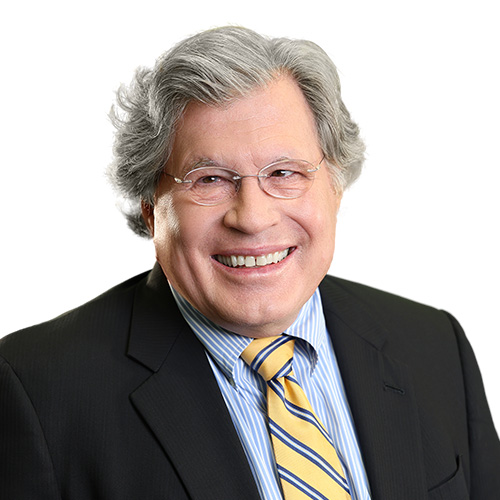
Jeffrey S. Baird, JD, is chairman of the Health Care Group at Brown & Fortunato, a law firm with a national health care practice based in Texas. He represents pharmacies, infusion companies, HME companies, manufacturers, and other health care providers throughout the United States. Mr. Baird is Board Certified in Health Law by the Texas Board of Legal Specialization and can be reached at (806) 345-6320 or [email protected].
AAHOMECARE’S EDUCATIONAL WEBINAR
Hub and Spoke, Centralized Intake, and Other Steps to Achieve Efficiencies
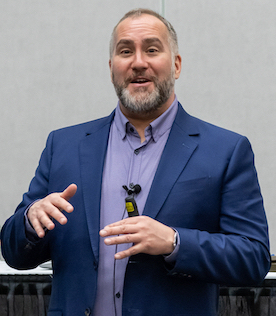
Presented by: Jeffrey S. Baird, Esq., Brown & Fortunato & Wayne van Halem, The van Halem Group
March 24, 2026
 1:30-2:30 p.m. CENTRAL TIME
The demand for DME is projected to grow steadily for years to come. This increase is driven by two major trends:
- The aging U.S. population and the rise in chronic medical conditions
- The cost savings associated with treating patients in the home rather than in hospitals or other facilities
As this demand grows, DME suppliers must navigate two significant challenges, CMS’s apparent goal of reducing the number of DME suppliers and ongoing decreases in third‑party reimbursement. To remain competitive, suppliers must adopt “economies of scale” that enable them to serve patients efficiently and cost‑effectively.
This webinar will walk through practical, real‑world strategies suppliers are using to streamline operations. Topics will include:
- Centralized Intake: How a supplier with multiple PTANs can consolidate intake into a single office
- The Hub‑and‑Spoke Model: A structure that supports geographic expansion without the cost and complexity of obtaining additional PTANs
- Use of Offshore Subcontractors: What suppliers must do to compliantly engage offshore partners and reduce expenses
Additional examples will highlight how suppliers can deliver high‑quality products and services while maintaining a sustainable cost structure.
Register for Hub and Spoke, Centralized Intake, and Other Steps to Achieve Efficiencies on Tuesday, March 24, 2026, 1:30-2:30 p.m. CT, with Jeffrey S. Baird, Esq. and Wayne van Halem.
