

AMARILLO, TX – It is not uncommon for DME suppliers and sleep labs to work together in the provision of therapeutic equipment to patients who test positive for obstructive sleep apnea (“OSA”). For example, the supplier and sleep lab may enter into a loan closet arrangement. Such an arrangement is also known as a consignment or stock and bill arrangement.
 In such an arrangement, the DME supplier will store CPAPs and disposables at the sleep lab facility. If a patient tests positive for OSA, and if the treating physician orders a CPAP for the patient, and if the patient chooses to obtain a CPAP from the DME supplier that has inventory stored at the sleep lab facility, the sleep lab employee will pull the CPAP/disposables out of the “closet” and hand them to the patient.
In addition to handing the CPAP/disposables to the patient, a sleep lab employee can spend time with the patient showing him/her how to (i) use the CPAP, (ii) clean the disposables, and (iii) change out the disposables. The DME supplier may want to compensate the sleep lab for the education/set-up services. If the DME supplier is compensating the sleep lab for education/set-up services, and if at least some of the patients are covered by Medicare, the supplier needs to be aware of the federal laws governing such an arrangement.
Applicable Law
CPAP Payment Prohibition
The CPAP Payment Prohibition (“Prohibition”), 42 C.F.R. § 424.57, states: “No Medicare payment will be made to the supplier of a CPAP device if that supplier, or its affiliate, is directly or indirectly the provider of the sleep test used to diagnose the beneficiary with obstructive sleep apnea. This prohibition does not apply if the sleep test is an attended facility-based polysomnogram.” In other words, the Prohibition does not apply when the Medicare patient spends the night at the sleep lab’s “brick and mortar” facility.
An “affiliate” is a “a person or organization that is related to another person or organization through a compensation arrangement or ownership.” A “provider of the sleep test” is an “individual or entity that directly or indirectly administers and/or interprets the sleep test and/or furnishes the sleep test device used to administer the sleep test.” Although the law is not entirely clear on this point, the safest course of action is to construe the Prohibition as being applicable to both traditional Medicare patients and Medicare Advantage patients.
The Prohibition’s purpose is to ensure that the CPAP device is medically necessary by preventing the CPAP supplier’s financial interest from creeping into the diagnosis and treatment. CMS explained that it “believe[d] that Medicare beneficiaries and the Medicare program are vulnerable if the provider of a diagnostic test has a financial interest in the outcome of the test itself. This creates the incentive to test more frequently or less frequently than is medically necessary and to interpret a test result with a bias that favors self-interest.” 73 Fed. Reg. 69856 (Nov. 19, 2008). In the final rule, CMS acknowledged that the Payment Prohibition was implemented to account for close cases. 73 Fed. Reg. 69857 (noting “that the provider of a sleep test will have a bias to interpret an inconclusive test as positive if that provider has a financial interest in the payment for the CPAP device.”).
Complying with the Prohibition is important for the following reasons:
- In an audit, if Medicare determines that some of the DME supplier’s claims arise out of an arrangement that violates the Prohibition, Medicare will likely recoup the amounts paid for those claims.
- If the DME supplier determines, or should have determined, that it submitted claims to Medicare in violation of the Prohibition, the supplier will likely be required to “report and refund” pursuant to the 60 Day Rule. Failure to comply with the 60 Day Rule can result in the claims becoming false claims.
- A whistleblower (e.g., an employee who is aware of the arrangement with the sleep lab) can sue the DME supplier under the federal False Claims Act. The whistleblower lawsuit will be in the name of the whistleblower and in the name of the United States. The theory of the lawsuit is that claims submitted to Medicare in violation of the Prohibition violate the federal False Claims Act.
- Assume that the DME supplier decides to sell to ABC Medical Equipment, Inc. The selling price will likely be a multiple of the selling supplier’s EBITDA (“earnings before interest, taxes, depreciation and amortization”). EBITDA is essentially the supplier’s net profit. If during “due diligence” ABC determines that a portion of the selling supplier’s Medicare claims violate the Prohibition, then either (i) ABC will walk away or (ii) ABC will insist that the EBITDA be reduced to take into account the improper claims
Federal Anti-Kickback Statute
42 U.S.C. § 1320a-7b, commonly known as the federal anti-kickback statute (“AKS”), states that it is a felony for a person or entity to knowingly or willfully offer, pay, solicit or receive any remuneration to induce a person/entity to refer a person for the furnishing or arranging for the furnishing of any item for which payment may be made under a federal health care program (“FHCP”), or the purchase or lease or the recommendation of the purchase or lease of any item for which payment may be made under a FHCP.
AKS Safe Harbors
Because of the breadth of the AKS, the Office of Inspector General (“OIG”) has published a number of “safe harbors.” If an arrangement meets all of the elements of a safe harbor, the arrangement does not violate the AKS. If an arrangement does not meet all of the elements of a safe harbor, it does not mean that the arrangement violates the AKS. Rather, it means that the arrangement must be carefully analyzed in light of the wording of the AKS, court decisions, and other published guidance.
When working with a sleep lab, an important safe harbor is the Personal Services and Management Contracts and Outcomes-Based Payment Arrangements (“PSMC”) safe harbor. It states that illegal remuneration (as defined by the AKS) does not include payment made to an independent contractor as long as a number of standards are met, including the following: (i) the agreement must be in writing and signed by the parties; (ii) the agreement must specify the services to be provided; (iii) the term of the agreement is not less than one year; (iv) the methodology for determining the compensation must be set in advance, be consistent with fair market value (“FMV”) in arm’s-length transactions, and must not take into account the volume or value of any referrals or business otherwise generated between the parties for which payment may be made in whole or in part under a FHCP; (v) the services performed must not involve a business arrangement that violates any state or federal law; and (vi) the aggregate services contracted for do not exceed those that are reasonably necessary to accomplish the commercially reasonable business purpose of the agreement.
To comply with the PSMC safe harbor, the safest course of action is the compensation to be set one year in advance (e.g., $36,000 over the next 12 months). The DME supplier should not pay the sleep lab on a per set-up basis (e.g., $125 each time the sleep lab spends time with the patient educating him/her on (i) using the CPAP and (ii) cleaning and changing out the disposables). Historically, the OIG and Department of Justice (“DOJ”) have considered such a payment methodology to be outside the PSMC safe harbor.
Federal Physician Self-Referral Statute
42 U.S.C.S. § 1395nn, commonly known as the federal physician self-referral statute (“Stark”), is a civil statute. It states that a physician cannot refer a Medicare/Medicaid patient to an entity for designated health services (“DHS”), in which the physician has a financial relationship (ownership or compensation) with the entity, unless an exception applies. One of the Stark exceptions is entitled the “Personal Services” (“PS”) exception. It is similar to the PSMC safe harbor to the AKS. Stark becomes relevant to an arrangement between a DME supplier and a sleep lab when the sleep lab is owned by a physician who refers Medicare/Medicaid patients to the sleep lab for sleep tests.
When a sleep lab is owned by a non-physician, the parties need to focus on the AKS and the PSMC safe harbor to the AKS. On the other hand, when the sleep lab is owned by a physician, not only must the parties focus on the AKS and the PSMC safe harbor, they also need to focus on Stark and the PS exception to Stark.
False Claims Act
31 U.S.C. § 3729, commonly known as the federal False Claims Act (“FCA”) provides that any person/entity that knowingly submits, or causes to submit, false claims to the government is liable for three times the government’s damages plus a penalty. It is the position of the Department of Justice (“DOJ”) that if a Medicare claim arises out of a kickback arrangement, or arises from violating the Prohibition, then the claim is a false claim.
The FCA is wide ranging:
- There can be both civil and criminal liability under the FCA.
- The fines and penalties under the FCA can be massive.
- The FCA can be triggered by violation of the Prohibition, the AKS and Stark.
- The FCA is the basis for qui tam (whistleblower) lawsuit.
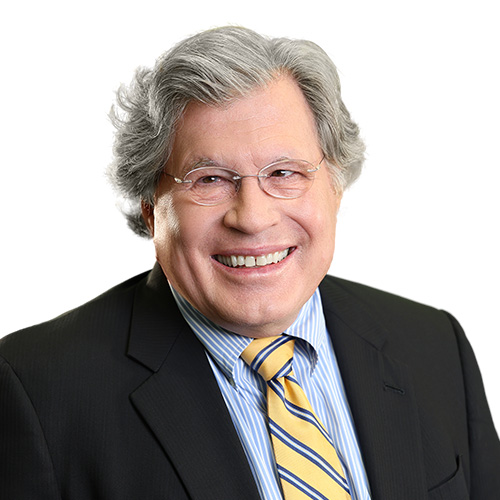
Jeffrey S. Baird, JD, is chairman of the Health Care Group at Brown & Fortunato, PC, a law firm with a national health care practice based in Texas. He represents pharmacies, infusion companies, HME companies, manufacturers and other health care providers throughout the United States. Baird is Board Certified in Health Law by the Texas Board of Legal Specialization and can be reached at (806) 345-6320 or [email protected].
