

MOUNTAIN VIEW, CA – In part one of our Why AI series, Geoff Seyon, co-founder and CEO of Celeritas AI, Inc. (a Medtrade exhibitor) talked about the many benefits of stopping claim denials at the source. The message was clear: clean claims drive predictable revenue, while denials create operational drag.
In part two, Seyon explores how to combine the human element with the occasionally mysterious capabilities of artificial intelligence. “The most successful providers are not using AI to replace their teams,” Seyon assures. “They are using AI to amplify the team’s capabilities.”
The optimistic scenario sees AI as offloading repetitive, time-consuming work such as document processing, order review, and complex billing so that staff can focus on higher-value responsibilities. Medtrade Monday sat down again with Seyon to explore these human element in hopes of finding a peaceful (and productive) human/AI alliance.
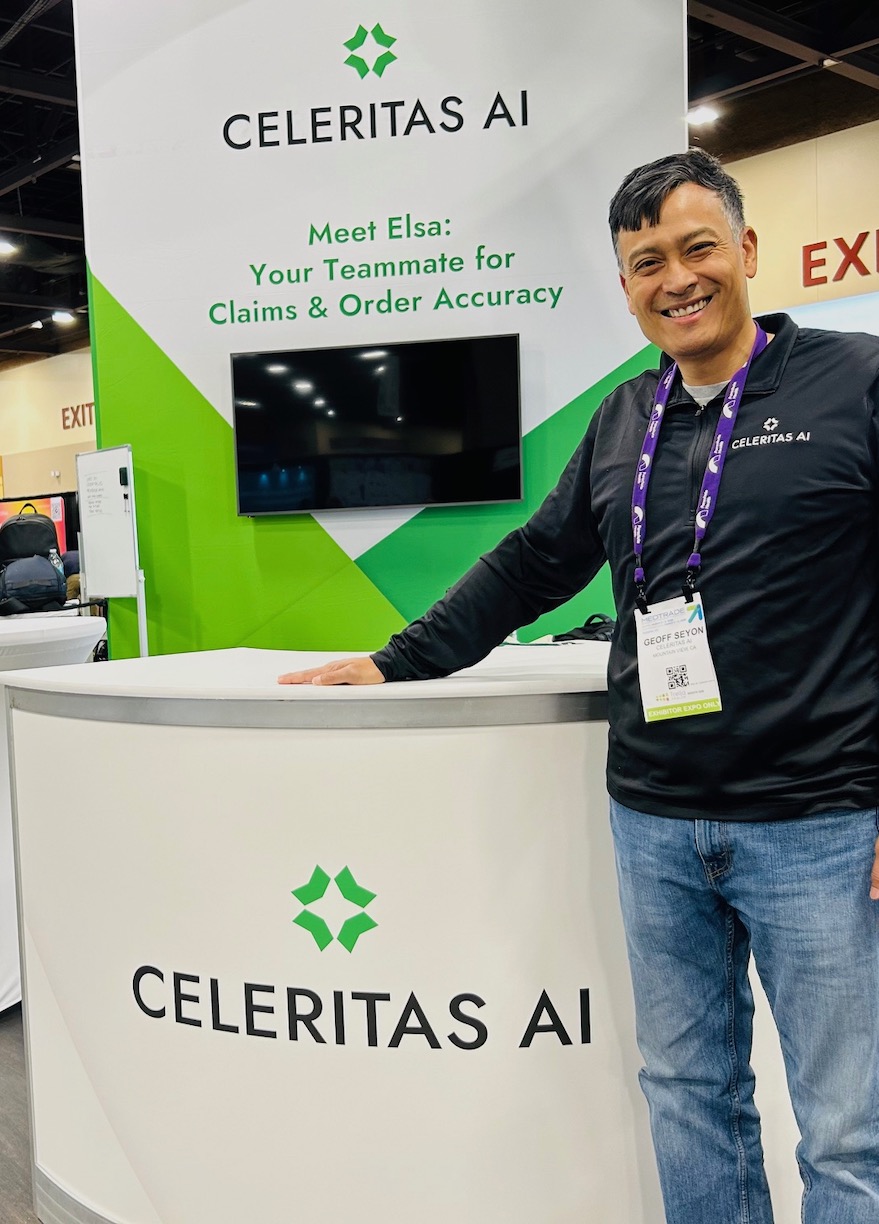 Greg Thompson, editor, Medtrade Monday: What are the those “higher value” responsibilities that AI is not good at?
Geoff Seyon: In the DMEPOS setting, that often means spending more time supporting patients and caregivers during critical moments, rather than being buried in administrative tasks. At the same time, human oversight remains essential. Healthcare operations are filled with edge cases, exceptions, and nuanced scenarios that still benefit from human judgment. The most effective model is a partnership: AI handles the heavy lifting at scale, while humans guide, validate, and manage the exceptions.

Thompson: What types of examples are you seeing?
Seyon: We’re seeing this hybrid approach deliver operational gains. For example, at Bedard Medical, the team found that a single user supported by Elsa Intake [a Celeritas feature] could handle the workload previously distributed across seven staff members, while completing that work in a fraction of the time. This has enabled orders to be fully processed the same morning that they are received.
Elsa Intake can process up to 150 faxes per hour per human verifier, including complex, multi-page documents that may contain multiple patients, varied document types, and scenarios such as new patient setups, audits, or discharge notices. Beyond throughput, teams report faster insurance and coverage verification, earlier error detection, and significantly shorter ramp times for new employees. But the impact isn’t just operational. It’s human.
Thompson: How does it benefit the human DME staff members?
Seyon: Many medical supplies teams today are stretched thin, and the cumulative burden of repetitive administrative work contributes directly to stress and burnout. By reducing that burden, AI can meaningfully improve the day-to-day experience of frontline staff. In fact, we often hear teams refer to Elsa as “her,” treating the platform as a trusted member of the team rather than just another tool. It’s not uncommon for staff to proactively thank leadership for introducing Elsa into their team. That dynamic is telling. When AI is implemented thoughtfully i.e. as a support system rather than a substitute – it not only improves efficiency, but also strengthens the human side of care delivery.
Thompson: Where do you see AI technology at the end of this year?
Seyon: We are now more than three years into the modern wave of generative AI, and one thing is clear: this is not a static moment. It’s an ongoing acceleration driven by both capital and adoption. Rather than speculating, it’s more useful to look at the underlying signals shaping the trajectory of the industry.
Thompson: What are those signals?
Seyon: The first is investment. The step-function increase in funding, culminating in a record-setting Q1 2026, reflects a global race to build and deploy increasingly capable systems. At this level of investment, it is difficult to argue for a near-term slowdown. Capital at this scale typically drives continued innovation, not stagnation.
Screenshot
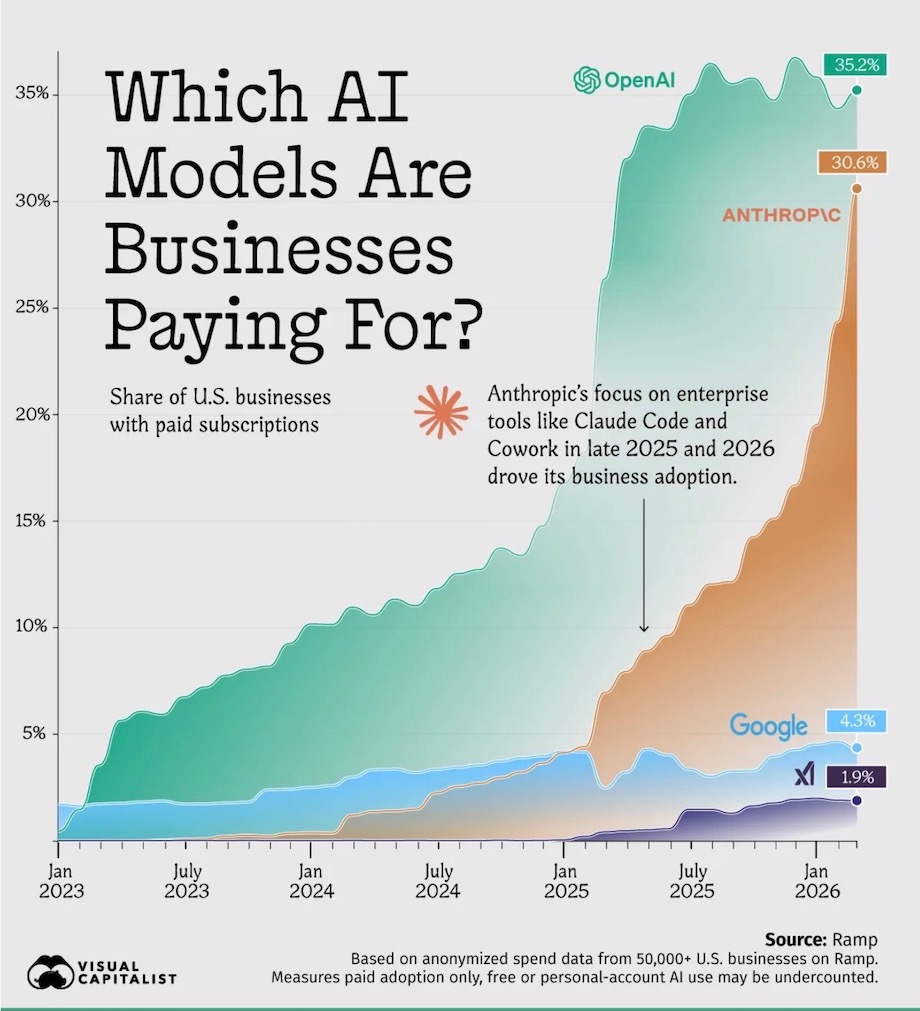
The second signal is enterprise adoption. This data shows the percentage of businesses paying for AI capabilities to enhance their operations. Adoption has moved beyond experimentation and into real, budgeted usage, particularly among early mainstream adopters.
Thompson: Where is DME in this evolution?
Seyon: In the medical supplies/DME space, adoption is still earlier in its curve. The industry likely trails broader enterprise benchmarks by a year or more, in part because it has taken time for vendors to develop solutions tailored to the complexity and regulatory demands of this environment. However, that gap is beginning to close. As more purpose-built applications emerge, we expect adoption to follow a similar trajectory, potentially reaching 25% to 30% of DME providers in the near term before expanding further into the broader market.
At the same time, the conversation around AI is evolving. What we expect by the end of the year is not less activity, but less hype and more practicality. The focus will shift away from AI as a concept and toward AI as accepted infrastructure, something that operates quietly within existing workflows and simply delivers measurable results. In many ways, it will begin to look less like “AI” and more like what the industry has always wanted: reliable workflow automation that actually delivers.
Thompson: What are the expectations at this point?
Seyon: Expectations are rising alongside adoption. Basic automation will no longer be sufficient. Providers will demand real accuracy, deeper domain understanding, and measurable ROI, particularly in areas like coverage determination, documentation comprehension, and billing excellence. In a margin-sensitive industry, performance will matter more than promise. From our perspective, the underlying challenges in DMEPOS—complex payer rules, documentation requirements, and operational inefficiencies—are not getting simpler. That reality alone will continue to pull the industry toward more advanced solutions.
Thompson: Will AI hit a lull or accelerate?
Seyon: Our view is that adoption of AI in DMEPOS will continue to accelerate, but in a more grounded, results-driven way. The next phase will be defined less by experimentation and more by execution, where the technologies that deliver tangible business outcomes separate themselves from the rest.
 Thompson: What new updates and/or company plans are in the works for Celeritas AI?
Seyon: Our focus at Celeritas AI is twofold: continuing to strengthen what we already do well, while leveraging the latest advances in AI to solve the most pressing operational challenges our clients face today.
Thompson: What are DME providers looking for when they come to you?
Seyon: First, our intake capabilities dramatically reduce the time it takes to move from incoming faxes, emails, or portals to a structured, actionable order within their patient/order management system. Second, we help prevent problems before they occur by enabling clean claims from the outset, while minimizing common bottlenecks such as eligibility checks and documentation gaps. Third, our platform uniquely compiles complex insurance contracts into actionable, real-time coverage rules, powering a context-driven workflow across a wide range of order types.
Thompson: What updates/improvements are in the works?
Seyon: Looking ahead, we are continuing to deepen and expand across each of these pillars. A major area of investment is payer rule coverage and accuracy. Every provider operates with a different payer mix and a unique set of edge cases, so continuously improving the breadth and precision of these rules is critical to delivering consistent results at scale.
We are also placing increased emphasis on intake workflows, because that is where many downstream issues originate. Standardizing and structuring data across fragmented inputs: fax, Parachute Health, email, and other portals – has an outsized impact on the efficiency of the entire process.
One of the most important areas we are advancing is deeper integration. Our goal is to ensure that Elsa operates as a seamless intelligence layer on top of existing systems such as NikoHealth, Brightree, and others, thereby enhancing workflows without requiring teams to change how they work. As part of this effort, we will soon be announcing a broader industry initiative focused on standardizing how AI and next-generation services integrate with patient/order management systems across the ecosystem.
Finally, we are continuing to invest heavily in customer success and technical product support. Real-time feedback, transparency, and trust in the system’s outputs are essential. When teams can rely on what they are submitting the first time, it represents a meaningful shift from the reactive, correction-heavy workflows that have historically defined this industry. Ultimately, our goal is to help providers operate with greater accuracy, efficiency, and confidence so they can scale their businesses without scaling complexity.